
Llámanos
:
+8618925446207
Envíenos un correo electrónico
:
marketing@databeyond.com
 English
 Français
 Deutsch
 Español
 日本語
日本語 中文
中文




La industria mundial del reciclaje de residuos se enfrenta a una presión cada vez mayor. El aumento de los costes laborales, las normativas más estrictas y la gran variabilidad de los flujos de materiales están llevando a las operaciones tradicionales al límite.
Los procesos manuales, los sistemas de datos fragmentados y la toma de decisiones reactiva ya no son suficientes para garantizar un rendimiento estable y eficiente de la planta.
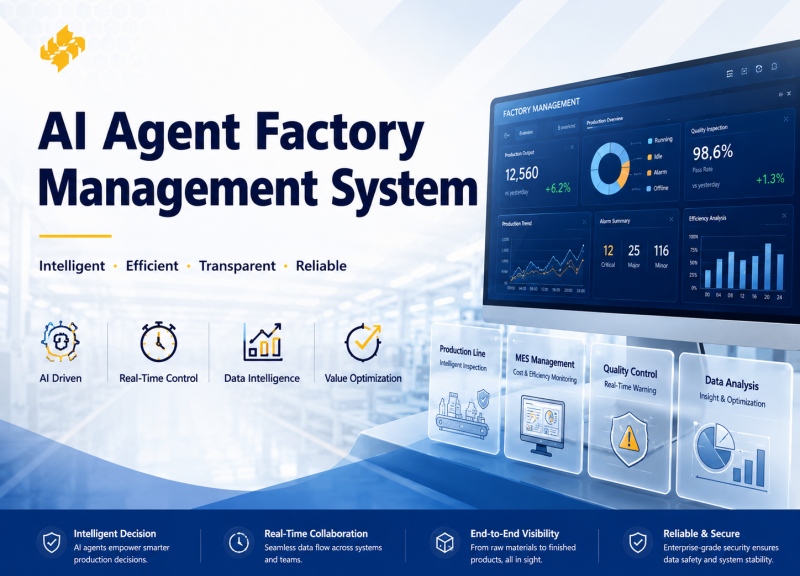
Para hacer frente a estos desafíos, DATABEYOND ofrece un sistema de gestión de fábricas inteligentes impulsado por IA, diseñado para permitir una optimización automatizada, basada en datos y a nivel de sistema en toda la operación de reciclaje.
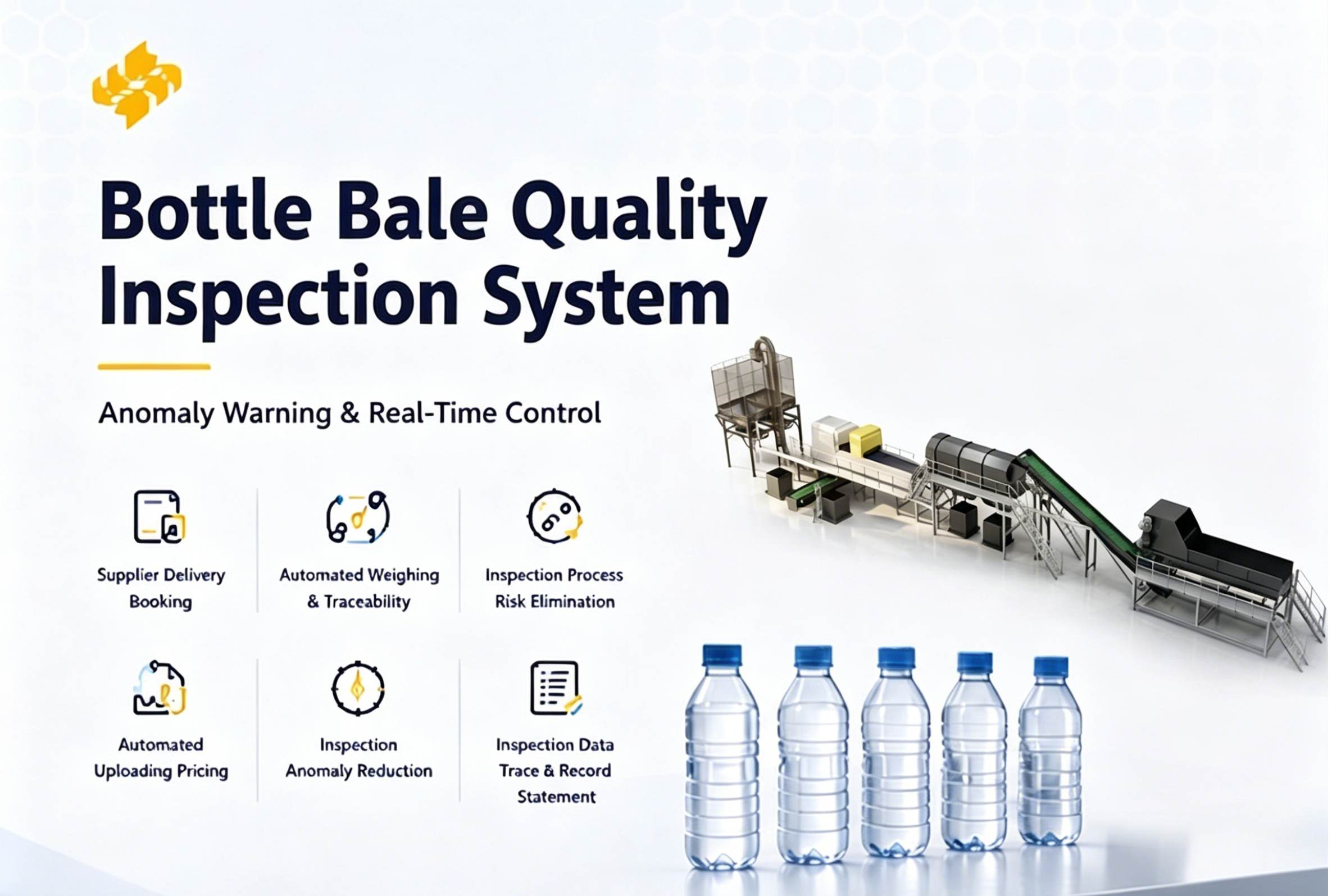
1. Control de materias primas: Inspección de calidad en origen mediante IA
El rendimiento estable de una planta comienza con una calidad constante de los insumos. Sin embargo, las fluctuaciones en las cadenas de suministro dificultan cada vez más el control de las materias primas.
El sistema introduce una inspección automatizada basada en inteligencia artificial desde el inicio del proceso para reducir los riesgos de adquisición y mejorar la coherencia de los datos de entrada.
● Trazabilidad de extremo a extremo: Cada fardo se rastrea mediante pesaje e identificación automatizados ("Un fardo, un código"), lo que garantiza una visibilidad total de las fuentes de los materiales.
● Mecanismo de fijación de precios basado en datos: La fijación de precios en las compras está directamente vinculada a los resultados de las inspecciones, lo que reduce la dependencia del juicio manual y mejora el control de costes.
● Integración perfecta del sistema: Los datos de inspección se sincronizan con los sistemas ERP, lo que proporciona total transparencia en los flujos de trabajo de adquisiciones y finanzas.
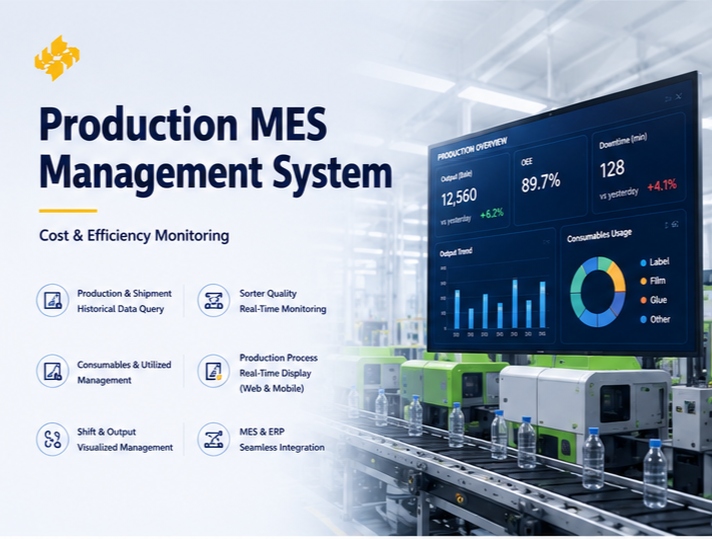
2. Visibilidad de la producción: MES integrado para operaciones en tiempo real
En muchas plantas de reciclaje, los sistemas desconectados y los silos de datos limitan la eficiencia operativa.
El sistema MES (Sistema de Ejecución de Fabricación) integrado conecta los datos de producción en todas las etapas, lo que permite la visibilidad y el control en tiempo real.
● Seguimiento del consumo de recursos en tiempo real: La monitorización continua del consumo de agua, electricidad y productos químicos permite un control operativo preciso.
● Acceso multiterminal: El estado de la producción, el rendimiento y la eficacia de la clasificación pueden consultarse en cualquier momento a través de ordenadores de escritorio y dispositivos móviles.
● Análisis de datos históricos: Los registros de datos exhaustivos proporcionan una base fiable para la optimización de procesos y la mejora del rendimiento.
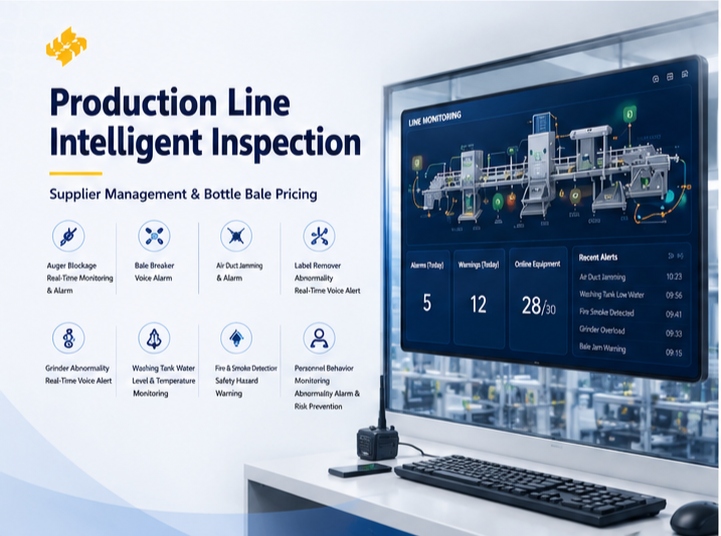
3. Fiabilidad operativa: Inspección y alerta temprana basadas en IA
Para que el funcionamiento sea estable, se requiere una monitorización continua y una respuesta rápida ante cualquier anomalía.
El sistema funciona como una capa de monitorización continua a lo largo de la línea de producción, utilizando visión artificial y datos de sensores para detectar problemas en tiempo real.
● Monitorización de todo el proceso: Detección automática de obstrucciones, anomalías en la alimentación e irregularidades en los equipos, con alertas instantáneas.
● Seguimiento del cumplimiento de las normas de EHS: Identificación de riesgos de seguridad, incluidas las infracciones relacionadas con los EPI (equipos de protección individual) y los riesgos de incendio, para contribuir a unas operaciones más seguras.
● Control de estabilidad del proceso: La monitorización en tiempo real de parámetros clave como los niveles de agua y la temperatura garantiza unas condiciones de producción uniformes.
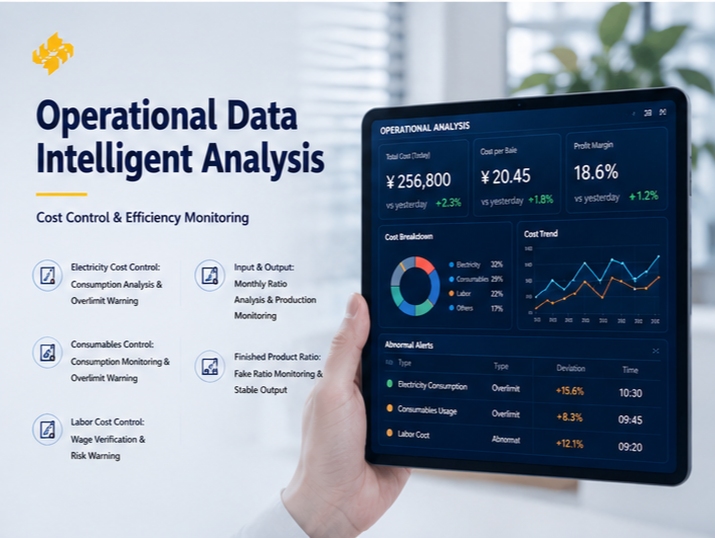
4. Optimización basada en datos: Análisis de operaciones inteligentes
Una gestión eficiente de las plantas requiere más que visibilidad: requiere información útil para la toma de decisiones.
El sistema aplica modelos de datos y análisis para respaldar la mejora operativa continua y la toma de decisiones informadas.
● Análisis de costos detallado: Identificación de ineficiencias en el consumo de energía, los insumos y la mano de obra para reducir los costos operativos.
● Seguimiento del rendimiento y del retorno de la inversión: El análisis automatizado de las relaciones entrada-salida proporciona una visión clara de la rentabilidad de la planta.
● Optimización de la salida: El seguimiento en tiempo real de la composición del producto (por ejemplo, copos transparentes, copos de colores) garantiza la adaptación a la demanda del mercado.
De la automatización a las operaciones autónomas
Al integrar la detección, el análisis y la toma de decisiones en un sistema unificado, el Sistema de Gestión de Fábrica Inteligente permite a las plantas responder dinámicamente a los cambios en la composición de los materiales, las condiciones del mercado y los requisitos normativos.
No se trata simplemente de una mejora en la automatización, sino de un cambio hacia operaciones autónomas y autooptimizadas.
La inteligencia como infraestructura central
Históricamente, la inversión en plantas de reciclaje se centraba en equipos físicos y líneas de procesamiento. Sin embargo, a medida que aumenta la complejidad operativa, la inteligencia del sistema se está convirtiendo en una capa fundamental de la infraestructura.
Un sistema de fábrica inteligente impulsado por IA unifica los datos, la toma de decisiones y la ejecución, lo que permite una mayor coherencia, una mejor adaptabilidad y una eficiencia general mejorada.
Para los operadores e inversores en el sector del reciclaje, la implicación es clara: la ventaja competitiva ya no dependerá de la cantidad de equipos instalados, sino de la eficacia con la que funcione el sistema en su conjunto.
 IPv6 RED SOPORTADA
Dejar un mensaje
Escanear a WeChat :

Escanear a WhatsApp :